
 English
 Deutsch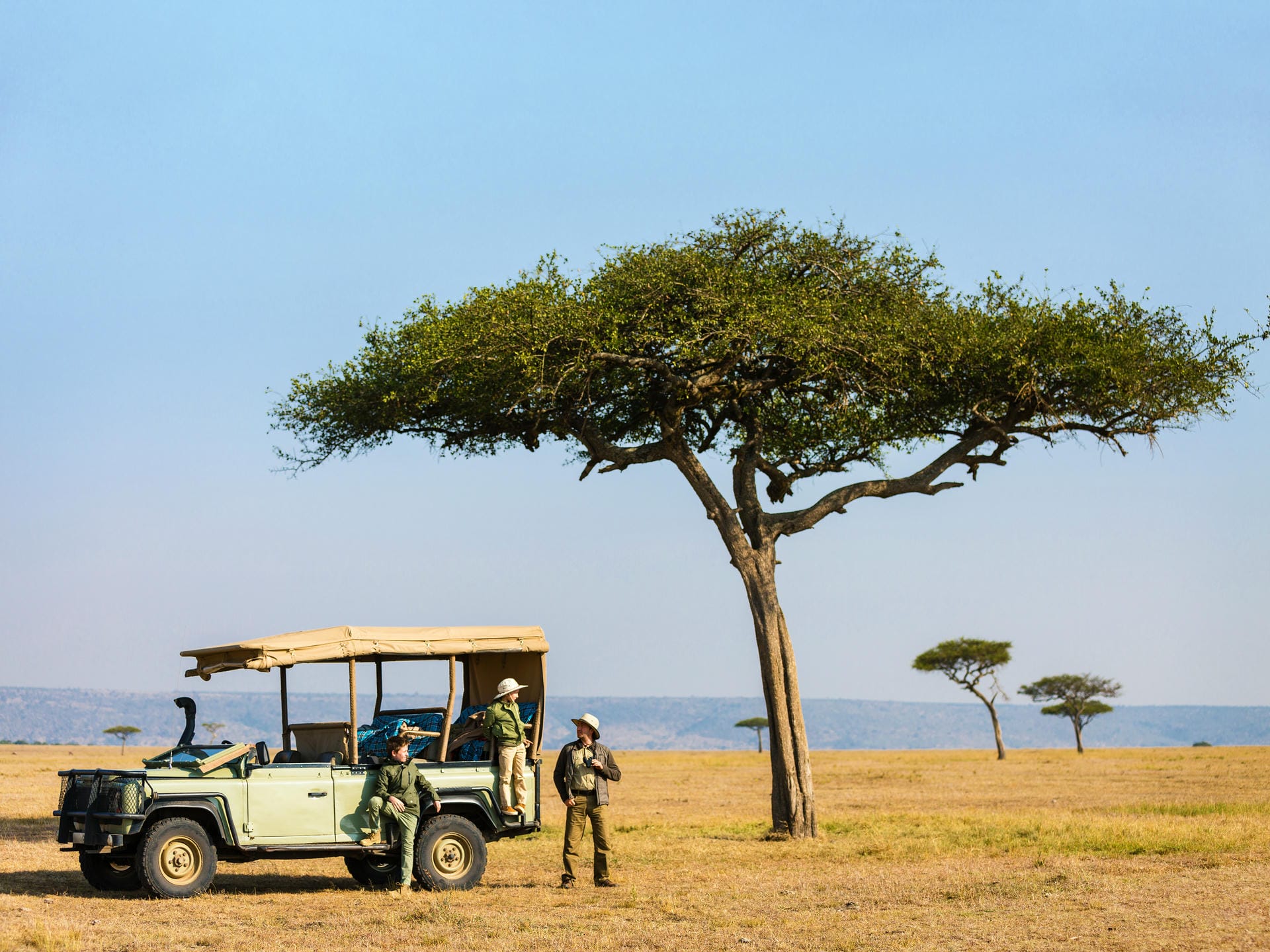
Questions & Answers
Our Service
Of course! Whether you want to cancel a day, add two, change a national park, or add a stay in Zanzibar. We'll customize your trip just for you.
Any consultation or customization of your itinerary before your final booking is free of charge and without obligation. So do not hesitate to contact us. Without your definitive commitment to a booking, there is no cost to you!
Request a no-obligation quote now for your next dream trip.
All our offers are with full board and English speaking guide. The cost already includes all park fees and domestic flights according to the program.
Our trips are very versatile and individual. Detailed information can be found with the respective offers on our website.
Yes, of course. Flying in a balloon over the savannah is offered in Tanzania in the Serengeti, the Ngorongoro Conservation Area, the Tarangire National Park and the Ruaha National Park. In Kenya this unique adventure can be experienced in the Masai Mara. Activities which are not mentioned in the program can always be added at an extra cost.
Yes, we are a member of the Swiss recognised guarantee fund "Swiss Travel Security". All customer funds are therefore insured against insolvency.
Trip Planning
From June to October the weather in Tanzania and Kenya is dry and mild. All national parks are accessible. In addition, the spectacular river crossing of the wildebeest through the Serengeti and the Masai Mara takes place here.
From mid-March to May and November is the rainy season. But even this has its charm. Hotels and lodges are cheaper, the national parks flourish and the big mass of tourists stays away.
Mid-December to February is mid-season and basically dry.
When you book, you will receive all the important information before the trip with the necessary preparations and a general packing list. Even during your trip we are there for you by phone and in writing.
To make your safari a dream trip, planning needs at least 6 months in advance.
Of course, booking is also possible at short notice. But especially in the high season from June to October, the popular lodges are often booked up quickly. It is accordingly worthwhile to book early.
On domestic flights in small aircraft, a maximum of 20 kg of luggage per person is allowed. It is generally recommended to take a backpack or soft travel bag instead of a hard-sided suitcase. These are easier to stow in the respective means of transportation and less sensitive to shocks on the bumpy roads.
Yes, of course. Even for children, a safari is a lasting experience. The tour will be adapted to your needs. A trip through Tanzania and Kenya is a trip for the whole family. The spacious vehicles have enough seats.
Even with little knowledge of the language, a guided tour with an English-speaking guide is quite feasible. In addition, a guide with knowledge of another language can accompany you for a small extra charge.
Yes. Already since summer 2020, all travelers are welcome.
Tanzania welcomes both vaccinated and unvaccinated visitors without an entry quarantine.
Since January 12, 2023, neither vaccination certificates nor PCR tests are required for entry, and an online health form is no longer necessary.
Preventive health measures such as frequent hand washing and social distancing are recommended. The wearing of face masks is not mandatory.
Safari
Absolutely! We also have safaris on offer that last only 5 days or less.
A short safari can be combined with domestic flights. So you experience the absolute highlights of the country within a few days - whether in the north or south.
Contact us and share your wishes with us. We'll help you put together your individual itinerary!
In Tanzania, we do not recommend traveling on your own.
For one thing, the roads are in very poor condition. Driving for hours over rough gravel, dodging huge potholes or large cracks on earthy roads is not everyone's cup of tea. It also requires some skill and knowledge to find your way around the national parks.
In Kenya a self-drive trip is quite possible.
The roads are well developed and the paths are signposted. What you miss with a rental car, however, are the exciting and expert narrations of your personal guide about nature and wildlife. As well as the convenience of a comfortable Land Cruiser with pop-up roof for the best view of wildlife.
It is not mandatory to book a guide. Nevertheless, we recommend a guided tour. The guides know their country very well. With their trained eyes and many years of experience, they know exactly where the animals are.
A guide makes your stay in Africa really comfortable. You don't have to drive around on bumpy roads in the park yourself and can concentrate on the wildlife and scenery. He also takes care of checking you into the lodges and much more.
Comfortable and light clothes / shoes are the order of the day for everyone. A warm windbreaker is recommended. There are no regulations of dress color for the Game Drive in the national park. Wear what you like!
Only for the walking safari good closed-toe shoes and earth-toned clothes are recommended. Bright colors attract insects.
Meals at the lodges (which also provide packed lunches for the safaris) are a mix of African, European and international cuisine. The selection of beverages reflects much that is familiar.
Water should be purchased for hygienic reasons and will be provided to you free of charge during the game drives.
Our vehicles have six seats under retractable roof and a passenger seat next to the guide.
A family with children can fit six people. A safari with five adults occupies the vehicle ideally, for a group with more than five people we recommend booking a second off-road vehicle.
In Tanzania, the speed limit is set at 80 km/h on rural roads and 50 km/h in built-up areas. This entails slower progress than one is used to in Europe. In Kenya, the speed limit on rural roads is 100 km/h, which is a little faster.
In Tanzania the trips between the national parks usually take between 2-3 hours and in Kenya about 3-4 hours.
Namibia
The highlights in Namibia include Etosha National Park with its waterholes, the dunes of Sossusvlei in Namib-Naukluft National Park, the rugged Skeleton Coast, and the vast landscapes of Damaraland.
Yes, Namibia is one of the best countries for self-drive safaris. Roads are well maintained and navigation is easy. Round trips with rental cars or 4x4 vehicles with rooftop tents are especially popular.
Swiss travelers require a visa. It can either be applied for online as an e-visa in advance or obtained on arrival at selected border posts and airports.
The official currency is the Namibian Dollar (NAD), which is pegged 1:1 to the South African Rand. Both currencies are accepted throughout the country.
Credit cards such as Visa and Mastercard are widely accepted in hotels, lodges, and restaurants. In more remote areas, it is advisable to carry cash.
The voltage is 220–240 volts. Type D and M sockets are used, so a suitable travel adapter is required.
The best time for wildlife viewing is the dry season from May to October, when animals gather around water sources. However, Namibia is a year-round destination, especially for landscapes and photography.
A guide is not strictly necessary, as Namibia is ideal for self-drive travel. However, guided safaris offer additional comfort, local expertise, and deeper insights into nature and wildlife.
Namibia is considered one of the safest countries to travel in Africa. Nevertheless, standard precautions should be taken, especially in cities and regarding valuables.
Most roads are well-maintained gravel roads. Major routes are partly paved. A 4x4 vehicle is recommended for more remote regions.